mail: editorinchief@sikhanthology.com

International Women’s Day: Guru Nanak’s Vision of Women’s Equality

Every year on International Women’s Day, societies around the world reflect on the dignity, rights, and contributions of women. While modern discussions about gender equality often appear to be recent social developments, the Sikh tradition articulated a powerful vision of women’s dignity more than five centuries ago.
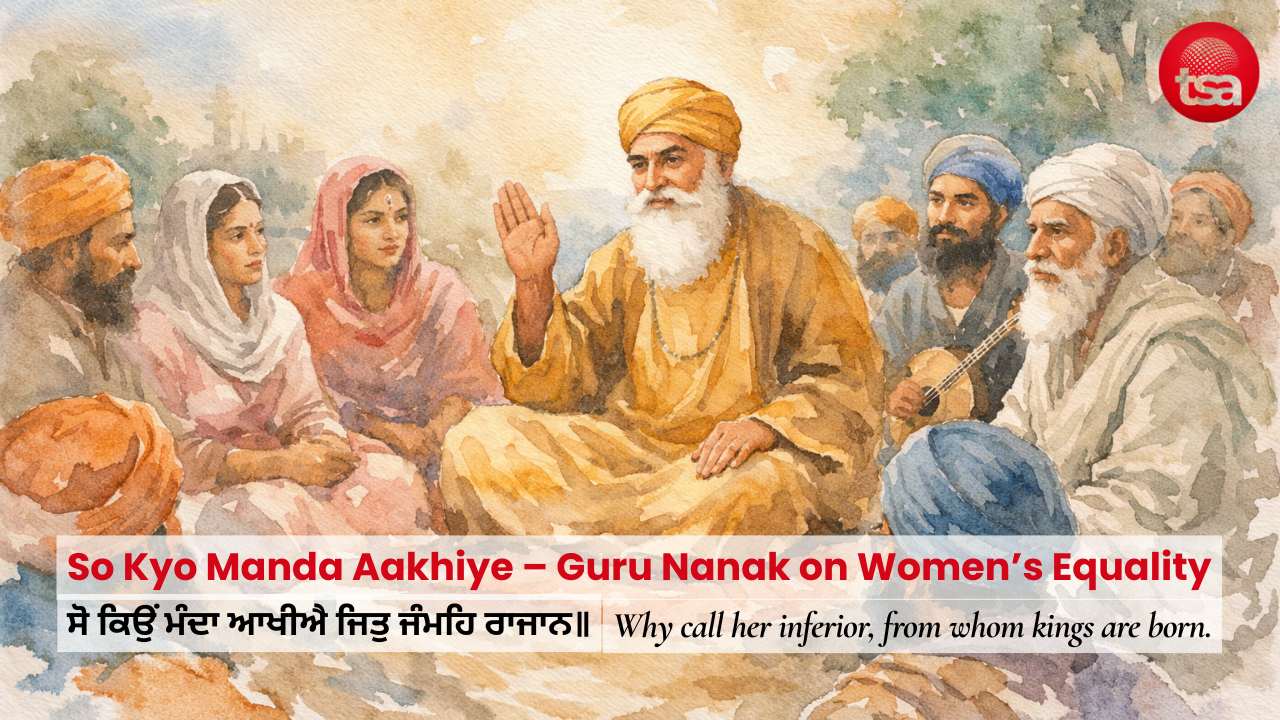
One of the most profound expressions of this vision appears in the words of Guru Nanak:
“ਸੋ ਕਿਉਂ ਮੰਦਾ ਆਖੀਐ ਜਿਤੁ ਜੰਮਹਿ ਰਾਜਾਨ॥”
So kio manda aakheejai jit jameh rajaan.
“Why call her inferior, from whom even kings are born?”
Preserved in the Guru Granth Sahib, this verse represents a remarkable affirmation of the dignity and importance of women in human society. At a time when many cultures placed women in subordinate positions and excluded them from religious or public life, Guru Nanak openly challenged such attitudes.
More than simply defending women, Guru Nanak articulated a broader ethical vision in which all human beings possess equal spiritual worth. His teachings not only criticized the prejudices of his time but also laid the foundation for a Sikh worldview built upon dignity, equality, and justice.
Guru Nanak’s Vision of Women’s Equality
Historical Context: Women in Medieval Society
To fully appreciate the significance of Guru Nanak’s statement, it is important to consider the social environment of fifteenth- and sixteenth-century South Asia.
In many parts of society, women experienced significant limitations. Cultural practices often restricted their access to education and public life, and prevailing attitudes frequently portrayed women as morally weaker or socially inferior. In several communities, women were excluded from important religious or intellectual spaces.
Against this background, the teachings of Guru Nanak represented a profound challenge to entrenched social norms. Rather than accepting hierarchical assumptions about gender, Guru Nanak emphasized the fundamental equality of all human beings before the Divine.
By questioning the logic of calling women inferior, he confronted the cultural prejudices of his time and encouraged society to reconsider deeply ingrained assumptions.
“So Kyo Manda Aakhiye”: Meaning and Interpretation
The verse “ਸੋ ਕਿਉਂ ਮੰਦਾ ਆਖੀਐ ਜਿਤੁ ਜੰਮਹਿ ਰਾਜਾਨ॥” forms part of a larger passage in which Guru Nanak reflects on the central role of women in human life.
The line highlights a simple yet profound truth: every human being enters the world through a woman. Mothers give birth to rulers, saints, scholars, and ordinary individuals alike. By drawing attention to this universal reality, Guru Nanak dismantles the notion that women could be regarded as inferior.
The verse transforms the discussion from one of hierarchy to one of interdependence and dignity. Human society itself depends upon women, and therefore any claim of their inferiority contradicts the very foundations of social existence.
How Guru Nanak Established Equality for Women
Beyond this single verse, the teachings of Guru Nanak consistently affirmed the dignity and equality of women.
Affirming Spiritual Equality
Guru Nanak taught that all human beings share the same spiritual essence. The Divine presence exists within every person regardless of gender, caste, or social position.
Because of this principle:
- Women possess the same capacity for spiritual realization as men.
- Spiritual devotion, meditation, and ethical living are equally accessible to all.
- No gender-based hierarchy exists in the path toward the Divine.
This understanding established spiritual equality as a foundational principle within Sikh thought.
Rejecting Social Attitudes that Degraded Women
Guru Nanak also criticized social attitudes that portrayed women as inferior or morally deficient. Instead of accepting such views, he emphasized mutual respect and ethical relationships within family and society.
Women were not to be viewed as sources of weakness or temptation but as respected and essential participants in human life. By challenging degrading perceptions of women, Guru Nanak reshaped the moral framework through which society understood gender.
Creating an Inclusive Religious Community
The community formed around Guru Nanak welcomed women as active participants in religious and social life.
Women were encouraged to:
- participate in congregational worship (sangat),
- contribute to collective service (seva),
- engage in spiritual learning and devotional practice.
This inclusive approach stood in contrast to many contemporary traditions where women were excluded from significant aspects of religious life.
Sikh Philosophy and Gender Equality
The teachings of Guru Nanak laid the intellectual and spiritual foundation for a Sikh worldview in which women and men share equal dignity.
Within Sikh philosophy:
- spiritual worth is independent of gender,
- devotion and righteous conduct define human value,
- social hierarchies based on gender possess no spiritual legitimacy.
These principles were preserved and transmitted through the teachings recorded in the Guru Granth Sahib, which repeatedly emphasizes the unity and equality of humanity.
Throughout Sikh history, women have therefore played important roles in community service, leadership, and spiritual life.
Why Guru Nanak’s Message Matters Today
The message contained in the verse “ਸੋ ਕਿਉਂ ਮੰਦਾ ਆਖੀਐ ਜਿਤੁ ਜੰਮਹਿ ਰਾਜਾਨ॥” remains deeply relevant today.
Despite advances in education, law, and social awareness, women in many parts of the world continue to face discrimination, inequality, and violence. Guru Nanak’s words remind society that such attitudes contradict the fundamental dignity of human beings.
On occasions such as International Women’s Day, the teaching invites reflection not only on the rights of women but also on the ethical values that shape societies. It encourages individuals to cultivate respect, equality, and justice in both personal conduct and public institutions.
The verse ultimately calls for a transformation in perspective: women are not merely participants in society but are foundational to its existence.
Conclusion
The words “ਸੋ ਕਿਉਂ ਮੰਦਾ ਆਖੀਐ ਜਿਤੁ ਜੰਮਹਿ ਰਾਜਾਨ॥” (So kio manda aakheejai jit jameh rajaan) stand among the most powerful affirmations of human dignity within the Sikh tradition. Spoken by Guru Nanak more than five centuries ago, the verse challenged social prejudices and affirmed the intrinsic worth of women.
By emphasizing spiritual equality, rejecting degrading attitudes, and fostering an inclusive community, Guru Nanak articulated a vision of society grounded in justice and respect.
Today, as the world continues to reflect on gender equality, the teachings preserved in the Guru Granth Sahib offer a timeless reminder: a truly just society must recognize and honour the equal dignity and potential of every human being.

Darvinder Singh Nanda is a legal scholar and Founder & Editor-in-Chief of The Sikh Anthology, focusing on Sikh intellectual history in Northeast India and its relationship with the global Sikh diaspora.