Beadbi in Sikhism refers to the violation of reverence toward the Guru Granth Sahib, the living Guru of the Sikh tradition. More than disrespect toward a sacred text, beadbi signifies a rupture in the spiritual relationship between the Sikh community…
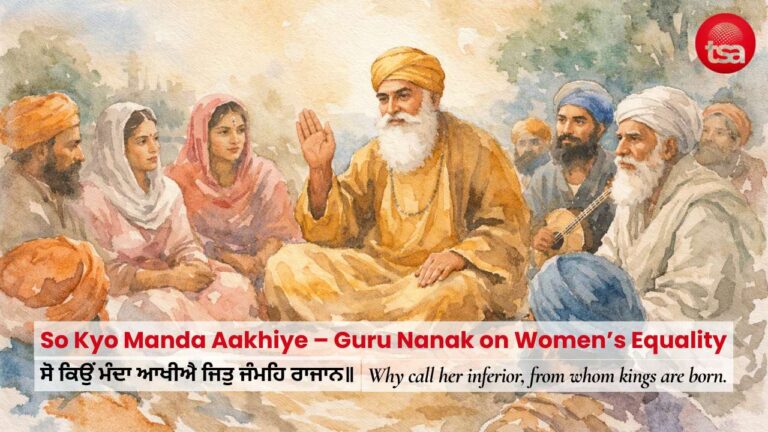
Every year on International Women’s Day, societies around the world reflect on the dignity, rights, and contributions of women. While modern discussions about gender equality often appear to be recent social developments, the Sikh tradition articulated a powerful vision of…

The concept of Miri-Piri represents one of the most distinctive principles in Sikh philosophy. It describes the integration of temporal authority (Miri) and spiritual authority (Piri)—a framework that encourages individuals to cultivate inner spiritual awareness while actively participating in the…
In today’s fast-moving world, stress has become a constant companion. Anxiety, mental clutter, and chronic tension often shape our daily lives. Against this backdrop, traditional spiritual practices such as Naam Simran offer timeless tools for inner balance. Rooted in Sikh…
Women have long shaped Sikh spiritual life with courage, wisdom, and devotion, yet their contributions are often overlooked. Sikhism was founded on the principle of equality, but women’s presence in formal religious leadership remains limited. This piece reflects on their…
The Guru Granth Sahib, Sikhism’s central scripture, is a text of profound spiritual, poetic, and philosophical depth. Translating it into other languages has always been a formidable task. The difficulty lies not only in its intricate linguistic structure but also…