mail: editorinchief@sikhanthology.com


Raja Singh Oberoi, Founder of Texla and Pioneer of Affordable Televisions, Dies at 90

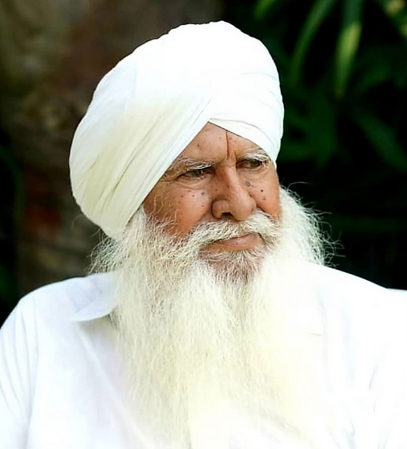
Raja Singh Oberoi, the founder of Texla Television and a pioneer in making radios and televisions affordable for the Indian middle class, passed away on February 28 at the age of 90. He was also the owner of GRD Academy and Club Nirwana.
Fondly remembered as the man who brought television sets into lakhs of homes across North India, Oberoi transformed the consumer electronics landscape during the 1970s and 1980s. Despite having no formal education, he built a business empire through determination, innovation, and an instinctive understanding of the market.
His son, Kawaljit Oberoi, described him as a visionary. “My father never had any formal education, but his hard work and dedication brought him success. Texla went on to dominate the Punjab market, capturing nearly 95 per cent of the TV market share,” he said. His brothers, Inderjit Oberoi and Sukhwinder Oberoi, currently manage the family business in Dehradun.
Early Life and Partition
Born on February 19, 1936, in Hillan village near Rawalpindi (now in Pakistan), Raja Singh was 11 years old when the Partition of India in 1947 forced his family to migrate to India. The upheaval shaped his resilience and entrepreneurial drive.
Settling in Punjab, he began his career as a radio repairman in the 1950s. Identifying a growing demand for affordable electronics, he launched Jupiter Radios in 1961. The reasonably priced sets quickly gained popularity, achieving annual sales of nearly 1.5 lakh units.
Rise of Texla
Building on the success of Jupiter Radios, Oberoi entered the television market in 1972 with the launch of Texla. Starting from a modest facility, the company initially produced 2,500 black-and-white television sets. By the late 1980s, annual production had crossed 3 lakh units.
Texla televisions, known for their affordability and durability, became a household name across Punjab and parts of North India. At its peak, the brand reportedly commanded nearly 95 per cent of the Punjab television market.
Oberoi strategically expanded operations to strengthen local manufacturing. He set up Rajkamal Industries in 1979 to produce wooden television cabinets, entered the colour television segment in 1982, introduced portable black-and-white models in 1983, and established an in-house picture tube plant in Ludhiana in 1986 to reduce dependence on imports. Additional brands such as Beltek and Bestavision further diversified the group’s portfolio.

Challenges and Adaptation
Oberoi navigated economic headwinds, including import restrictions and supply constraints in the 1970s and 1980s, by focusing on indigenisation and cost efficiency. Although the 1990s saw increased competition from multinational brands, Texla retained a loyal customer base in North India for years.
Philanthropy and Faith
As his business flourished, Oberoi turned increasingly toward philanthropy. He established Sarab Sanjhi Gurbani, a unit dedicated to producing and distributing audio and video cassettes promoting Gurbani. The organisation also broadcast devotional music programmes on radio and television and printed posters and booklets to spread the teachings of the Sikh Gurus.
Through charitable initiatives and educational institutions, he contributed to community development in Punjab and Dehradun, reflecting a deep commitment to service.
Legacy
Raja Singh Oberoi’s journey—from a young refugee of Partition to an industrialist who brought affordable technology to millions—remains a testament to entrepreneurial grit. For countless families, Texla televisions marked their first experience of televised entertainment at home.
He is survived by his sons and extended family, who continue to manage the family’s business interests. Oberoi’s legacy endures in the history of India’s consumer electronics industry and in the memories of households that grew up with the glow of a Texla screen.

Darvinder Singh Nanda is a legal scholar and Founder & Editor-in-Chief of The Sikh Anthology, focusing on Sikh intellectual history in Northeast India and its relationship with the global Sikh diaspora.