mail: editorinchief@sikhanthology.com

How Partition Shaped Punjabi Literary Voices

The Partition of 1947 left an indelible mark on Punjabi literature, reshaping its themes, voices, and imagination. It was not just a political division but a human tragedy that produced lasting trauma, forced identity shifts, and inspired a fierce artistic resilience on both sides of the border.
Historical Backdrop and Literary Trauma
Punjab, a land once celebrated for its shared traditions and cultural syncretism, was torn apart by violence, displacement, and loss. These events etched deep scars into the lives of its people—and its writers. For many poets, novelists, and storytellers, literature became both a lament and a record of testimony, a way to preserve memory while speaking truth to generations that followed.
Prominent Literary Voices
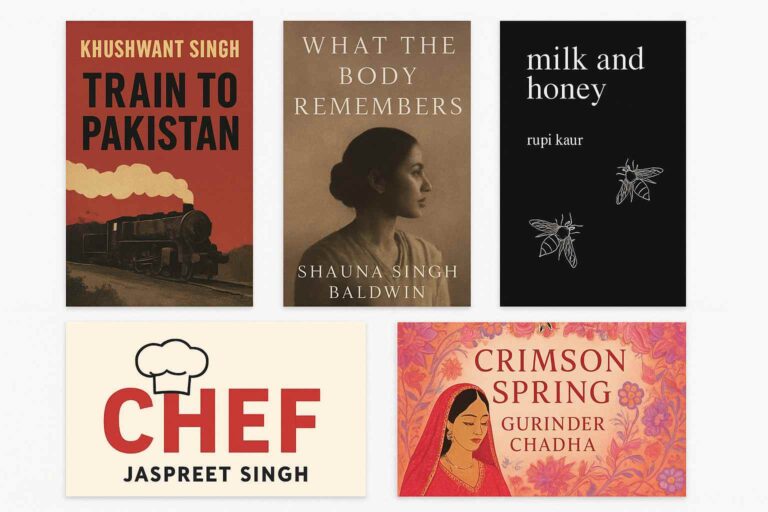
- Amrita Pritam: Her iconic poem Ajj Akhan Waris Shah Nu gave voice to the grief of millions, calling upon the legendary poet Waris Shah to witness the tragedy. Her novel Pinjar remains a cornerstone of Partition literature, exposing the plight of women caught in cycles of abduction and forced conversion.
- Khushwant Singh: In Train to Pakistan, Singh drew directly from the horrors he witnessed, creating a stark narrative of communal violence and moral ambiguity.
- Faiz Ahmed Faiz: Though he wrote primarily in Urdu, Faiz’s revolutionary verses carried the weight of loss, nostalgia, and resilience that resonated deeply with Punjabis.
- Surjit Patar and Pash: Belonging to later generations, both poets revisited themes of fragmentation and longing, often connecting them to newer waves of violence and political unrest that recalled the wounds of Partition.
Dominant Themes in Partition Literature
Punjabi writing on Partition consistently circles back to certain enduring motifs:
- Trauma and Nostalgia: Literature grapples with broken communities, personal losses, and the haunting echoes of violence.
- Women’s Experiences: Many works highlight the gendered violence of Partition—abductions, assaults, and fractured families—bringing women’s voices and suffering to the forefront.
- Loss of Home and Identity: Writers capture the anguish of displacement and the longing for a homeland that no longer exists.
- Reclaiming Punjabiyat: Beyond grief, some works strive to reassert a shared cultural identity, seeking unity despite political borders and linguistic divides.
Legacy and Continuing Relevance
Nearly eight decades later, Partition remains an unresolved and haunting subject in Punjabi letters. Writers continue to return to it through memoirs, short stories, and poetry, keeping alive the memories of that rupture. These works are not just acts of remembrance but also warnings, urging reflection on the costs of division.
The voices shaped by Partition became witnesses, chroniclers, and guardians of a fractured land. Their words continue to define Punjabi identity and enrich the literary imagination, both within the subcontinent and across the diaspora.

Associate Editor at The Sikh Anthology Blog, contributing to content development, editorial refinement, and original writing aligned with the publication’s vision.