mail: editorinchief@sikhanthology.com

Punjabi Folk Tales: Uncovering the Hidden Meanings of Oral Traditions

Punjabi folk tales, passed down through generations, are a vibrant cornerstone of Punjab’s cultural heritage. Woven together with music, poetry, and local customs, these stories entertain while preserving history, moral values, social lessons, and spiritual symbolism. The enduring oral tradition of these tales reflects Punjab’s resilience, collective memory, and rich cultural identity.
The Role of Oral Traditions in Punjabi Culture
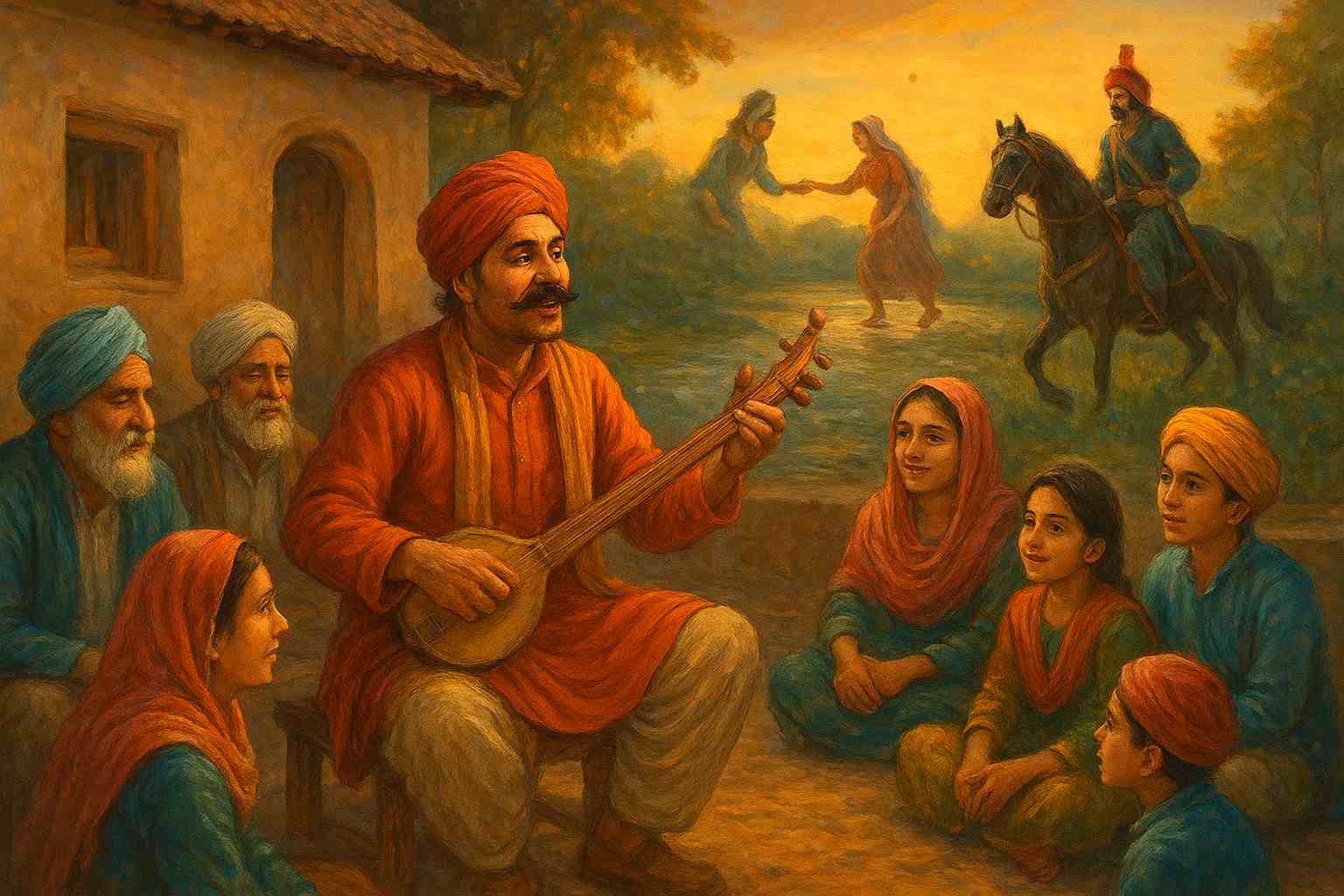
In Punjab, oral tradition plays a vital role in keeping stories, songs, and legends alive. Before written texts became widespread, storytellers, singers known as dhadis, and elders shared tales that captured life lessons, historical events, and cultural beliefs. This storytelling method is dynamic, allowing adaptation while keeping the core message intact. As a living legacy, these narratives help preserve cultural memory amid social and political changes, sustaining Punjabi identity both at home and across the diaspora.
Prominent Punjabi Folk Tales and Their Symbolism
Many Punjabi folk tales carry rich symbolic meaning, reflecting spiritual, social, and moral themes:
- Heer Ranjha: Beyond a tragic love story, Heer Ranjha questions social hierarchies, religious intolerance, and oppressive norms. It celebrates the triumph of love and loyalty over societal barriers.
- Sohni Mahiwal: This tale reflects the soul’s spiritual journey. Sohni’s river-crossing with an earthen pot symbolizes guidance along the path of devotion, while a broken or poorly baked pot represents unpreparedness. The story emphasizes love, sacrifice, and the ultimate union with the divine.
- Sassi Punnu: Themes of fate, resilience, and the pursuit of love against adversity define this tale. Mystical elements, including Sassi’s birth and death, symbolize destiny and spiritual ascent.
- Dulla Bhatti: A folk hero representing resistance and hope, Dulla Bhatti embodies rebellion against oppression and the defense of honor and justice. His story highlights solidarity and moral integrity.
Hidden Meanings and Moral Lessons
Punjabi folk tales often explore love, sacrifice, resistance, loyalty, and morality, layered with spiritual and societal commentary. Animals, natural elements, and supernatural events are used metaphorically to convey deeper lessons. Female characters frequently personify cultural ideals or struggles, revealing social critiques within seemingly simple stories. These narratives speak to universal human experiences, allowing them to resonate across generations and geographies.
Contemporary Relevance and Preservation
Despite modern technology offering new ways to record and share stories, the oral tradition remains central to Punjabi culture. Musical recitations by dhadis continue to bridge the past and present. Folk tales inspire contemporary writers, poets, and artists, who draw on their richness to celebrate Punjab’s heritage of resilience and cultural pride.
Globally, efforts to document and study Punjabi oral traditions are expanding, ensuring these stories remain accessible to future generations. Oral storytelling fosters community bonding, cultural education, and the preservation of Punjabi identity worldwide.

Associate Editor at The Sikh Anthology Blog, contributing to content development, editorial refinement, and original writing aligned with the publication’s vision.