mail: editorinchief@sikhanthology.com

Calligraphy of Gurbani: Preserving a Sacred Tradition

Among the many threads of Sikh heritage, the calligraphy of Gurbani stands out as a deeply spiritual art form. Once central to devotion and cultural identity, this practice now risks slipping into obscurity in a world dominated by digital convenience. Gurbani calligraphy was never just handwriting, it was a meditative act that bound the scribe to the divine Word. Safeguarding this tradition is essential for preserving both the sanctity and continuity of Sikh scripture.
The Historical and Spiritual Role of Gurbani Calligraphy
The roots of Gurbani calligraphy reach back to the era of the Sikh Gurus. Long before the printing press, sacred texts such as the Guru Granth Sahib and other prayer books were meticulously handwritten in the larrivar style, where words flowed without spaces to maintain the scripture’s original rhythm. Figures like Bhai Gurdas Ji, Baba Deep Singh Ji, and Bhai Mani Singh Ji earned reverence for their devotion to transcribing Gurbani with exacting precision.
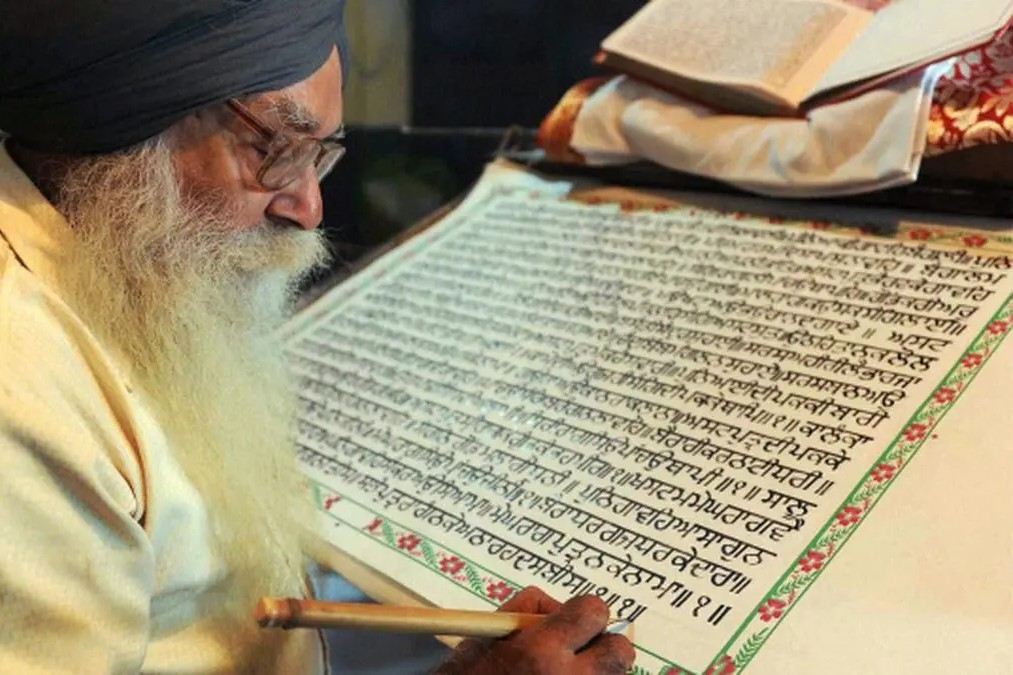
Handwriting Gurbani was more than preservation, it was seva, a form of service and meditation. The process demanded mastery of the Gurmukhi script and unwavering concentration, fostering a deep spiritual bond between the writer and the sacred text. Sikh history and literature consistently highlight the spiritual elevation that arose from this practice, placing calligraphy at the heart of Sikh tradition.
The Decline in the Modern Era
With the advent of printing, the painstaking art of Gurbani calligraphy began to fade. Mass-produced saroops and pothis made scripture more accessible but weakened the tradition of handcrafted manuscripts. Scholars argue that this shift diminished not only the artistic value but also the spiritual depth tied to the act of writing Gurbani.
The move to pad-ched format, which separates words, further disrupted the original larrivar style. Many Sikh scholars and authorities have voiced concern, warning that this departure alters how Gurbani was intended to be read and understood.
Efforts to Keep the Tradition Alive
Amid this decline, artists and calligraphers have taken up the task of revival. Figures like Hardeep Singh of Amritsar have blended tradition with modern aesthetics, producing hand-drafted Gurbani calligraphy enriched with ornate borders and striking color work. Their creations, now showcased in gurdwaras, galleries, and private collections across India and the diaspora, remind communities of the art’s spiritual and cultural worth.
Artists stress the importance of displaying Gurbani calligraphy in homes and gurdwaras, keeping the sacred presence of Gurbani alive in everyday life. Some scholars and community leaders have called on institutions such as the Shiromani Gurdwara Prabhandhak Committee (SGPC) to actively support calligraphy initiatives, ensuring the tradition endures alongside printed scripture.
The Discipline of Sacred Writing
Because of Gurbani’s sacred nature, calligraphy demands the utmost care. Even a minor error risks beadbi, or disrespect. Traditionally, scribes began with smaller hymns before progressing to larger collections, each effort preceded by prayer and guided by reverence. Accuracy was ensured through comparison with established manuscripts, often reviewed by knowledgeable peers. This rigor preserved both the authenticity and spiritual integrity of the texts.
A Call for Renewal
Gurbani calligraphy is more than an art form, it is devotion made visible. Its survival matters not only for the beauty of Sikh scripture but for sustaining the community’s bond with the divine Word. As technology advances, this practice offers a vital reminder of the spiritual discipline rooted in Sikh tradition.
By supporting artisans, encouraging education, and celebrating the artistry of calligraphy, Sikh communities worldwide can keep this sacred practice alive. What risks fading into memory can instead flourish again, transforming handwriting into a living expression of faith.

Associate Editor at The Sikh Anthology Blog, contributing to content development, editorial refinement, and original writing aligned with the publication’s vision.